Partner Frederick Septimus Kelly
Queer Places:
29 Queen Anne St, London W1G 9HU, UK
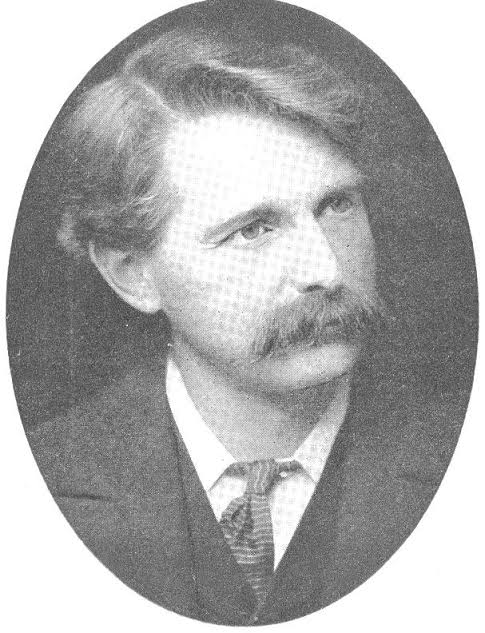 Leonard Borwick (February 26, 1868 - September 15, 1925) was born on February 26, 1868, in Walthamstow, Essex, into a Staffordshire family. He showed
early musical promise, initially studying the piano under Henry R. Bird and violin and viola under Alfred Gibson. At the age of sixteen, he moved to
Germany to enter the Hoch Conservatory in Frankfurt, where he studied piano under the legendary Clara Schumann, composition under Bernhard Scholz and
Iwan Knorr, and string instruments under Fritz Basserman. Clara Schumann regarded him as one of her finest pupils, noting that she had rarely heard major
works by Schumann and Brahms played with such mastery.
Leonard Borwick (February 26, 1868 - September 15, 1925) was born on February 26, 1868, in Walthamstow, Essex, into a Staffordshire family. He showed
early musical promise, initially studying the piano under Henry R. Bird and violin and viola under Alfred Gibson. At the age of sixteen, he moved to
Germany to enter the Hoch Conservatory in Frankfurt, where he studied piano under the legendary Clara Schumann, composition under Bernhard Scholz and
Iwan Knorr, and string instruments under Fritz Basserman. Clara Schumann regarded him as one of her finest pupils, noting that she had rarely heard major
works by Schumann and Brahms played with such mastery.
Borwick made his official debut in November 1889 at the Museum concerts in Frankfurt, performing Beethoven's "Emperor" Concerto, followed by
orchestral and recital appearances in Strasbourg. He made his triumphant London debut on May 8, 1890, at a Royal Philharmonic Society concert playing
Robert Schumann's Piano Concerto in A minor. He quickly established himself as a premier classical interpreter in Britain, highly sought after for
chamber concerts with the Joachim Quartet and popular recitals at St. James's Hall. His performance of Brahms's D minor concerto in Vienna in 1891 under
Hans Richter earned the direct praise of Johannes Brahms himself, who wrote that Borwick's playing captured all the fire and technical brilliance he
could have hoped for.
Throughout the 1890s, Borwick formed a famous and fruitful musical collaboration and recital partnership with the baritone Harry Plunket Greene,
touring extensively and performing a vast repertoire ranging from Bach to Brahms. Never standing still artistically, Borwick expanded his reach
internationally, undertaking a major concert tour across America and Australia in 1911. In the later years of his career, he developed a deep affinity
for the modern French school, becoming especially admired for his sophisticated interpretations of Claude Debussy and
Maurice Ravel—even creating a notable piano transcription of Debussy's L'Après-midi d'un faune. He spent his
later years continuing his artistic work and teaching, influencing a new generation of musicians before passing away rather young on September 15, 1925,
in Le Mans, France, at the age of 57.
Regarding personal life links and intimate associations, historical discussions surrounding Borwick often intersect with queer history through his
close relationships with men in elite artistic circles. Most notably, in later years, Borwick lived together in a London apartment with the Australian
composer, pianist, and World War I soldier Frederick Septimus Kelly. The two shared a home equipped
with two pianos so they could practice and play duets together, and biographical commentary notes a deep romantic and emotional attachment between them.
Borwick was reportedly devastated by Kelly's death at the Battle of the Somme in 1916, a loss that heavily marked his later years. While the private
domestic arrangements of Victorian and Edwardian bachelors were frequently kept unrecorded or obscured by the social conventions of the era, Borwick's
close cohabitation and profound emotional bond with Kelly place him within the broader historical framework of male-to-male domestic partnerships common
among creative figures of that period.
References:
- Music and Letters (January 1925 issue, featuring an article by Leonard Borwick)
- Edvard Grieg in England by L. Carley (Boydell, Woodbridge, 2007)
- "On the difference of Time and Rhythm in Music" by H. Dixon, published in Mind IV (1895)
- A Dictionary of Modern Music and Musicians edited by A. Eaglefield-Hull (Dent, London, 1924)
- Royal Philharmonic by R. Elkin (Rider, London, 1946)
- From Blue Danube to Shannon by Harry Plunket Greene (Philip Allan, London, 1934), which reproduces Borwick's memoir piece "Some personal recollections" originally published in Music and Letters (Vol. 7, no. 1, January 1926)
- The New Age (Review of a Leonard Borwick concert, April 7, 1921)
- "Leonard Borwick: A Memory and Appreciation" by W. Saunders, published in The Musical Times 67 (September 1, 1926)
- Music in London 1890–1894 by George Bernard Shaw (Constable, London, 1932)
- My Life of Music by Henry Wood (Gollancz, London, 1938)
- "The Art of Leonard Borwick" by M.K. Woods, published in Girl's Own Paper 23 (1903)
- Illustrated London News (Obituary of Leonard Borwick, September 26, 1925)
- Grove's Dictionary of Music and Musicians (specifically the 4th edition, 1940, entry on Leonard Borwick by H.C. Colles)
Support this project
This website is a passion project researched, developed, and funded entirely by me. If you find the content valuable and would like to help support the ongoing research and hosting costs, any contribution is deeply appreciated.
Thank you for keeping this independent resource alive!
My books on Amazon: Elisa Rolle's books
BACK TO HOME PAGE